

Stock Up Smart: Your Straightforward Guide to Buying Bulk Ammo Online
When a shooter prepares for a long range session, a single box of cartridges rarely suffices, making a bulk ammo purchase the practical foundation for the day. Bulk ammo is simply cartridge ammunition sold in large quantities, typically in cases of 500 to 1,000 rounds, packaged in sealed cardboard or plastic Handgun Ammo for Sale boxes for efficient storage and transport. By buying in volume, the cost per round drops significantly, allowing for more trigger time and consistent practice without frequent trips to a retailer. To use it effectively, simply store the sealed containers in a cool, dry place and load magazines or en bloc clips directly from the bulk packaging as needed.
What Does Buying Ammunition in Large Quantities Actually Mean for You?
Buying bulk ammo means you’re committing to a serious range habit, not just a casual box here and there. Large quantities translate to lower cost per round, so you can actually practice more without flinching at the credit card bill – that’s the real win. It also means you’ll need to think about storage, since a couple thousand rounds takes up space and demands proper, dry conditions to stay reliable. But the shift is mental as much as physical: you stop viewing each trigger pull as precious and start treating it as reps for skill building. You’ll also develop a consistent inventory, so you’re not mixing old and new batches that could shift point of impact. However, be honest about your pace – if you shoot sparingly, bulk ammo can tie up cash and sit for years, which isn’t ideal. Ultimately, bulk ammo changes your relationship with practice and logistics – it’s a commitment to volume, not just a purchase. Make sure your range bag and safe can handle the weight, because that’s where the practical reality kicks in.
Understanding the Real Cost-Per-Round Advantage
The core of bulk ammunition savings lies in calculating the true cost-per-round after factoring in shipping, taxes, and any handling fees. A single box of Rimfire Ammo for Sale 20 rounds may carry a higher percentage of overhead compared to a case of 500 or 1,000 rounds, where those fixed costs are spread across more units. To understand your real advantage, always divide the total checkout price—not the advertised per-box price—by the exact number of rounds delivered. This reveals whether the bulk price genuinely beats buying smaller quantities locally, accounting for your time and fuel. Additionally, consider your actual consumption rate; the advantage disappears if you overbuy and incur storage or rotation costs.
- Calculate price per round using the final delivered total, not shelf price.
- Compare bulk delivered cost against local per-box prices including sales tax.
- Factor in your shooting frequency to avoid paying for rounds you won’t use before shelf-life concerns.
How Volume Purchasing Transforms Your Range Session Budget
When you buy ammunition in bulk, the per-round price drops measurably, which directly lowers the fixed cost of each trip to the range. Instead of paying retail per box every visit, your upfront outlay spreads across hundreds of rounds, shrinking the cost per shot and letting you train longer for the same monthly 6.5 PRC Ammo for Sale allotment. That shift means you can schedule more frequent sessions without recalculating your budget, since the marginal expense of an extra magazine becomes negligible. Volume purchasing transforms your range session budget by converting a per-visit expense into a stockpile-based economy, where the savings appear as extra practice time or upgraded targets.
Buying bulk ammo reduces cost per round, so your range budget stretches to cover more trigger time per dollar.

How to Match Your Firearm’s Caliber Needs With a Bulk Order
When planning a bulk ammo purchase, begin by cataloging every firearm you own and recording its exact caliber marked on the barrel. Never assume a .38 Special round fits a .357 Magnum cylinder for volume buys, as pressure variances matter—yet you can consolidate orders where chambers explicitly allow shared ammunition, like .223 Remington/5.56 NATO. Calculate your monthly range consumption per gun, then prioritize a single dominant caliber for your largest bulk order to maximize per-round savings. Reserve smaller bulk lots only for secondary arms you shoot weekly. Verify headstamp consistency across cases—mixed brass from different manufacturers can alter zero. Finally, match bullet weight to your firearm’s twist rate; a 1:7 barrel prefers 62-grain loads, while 1:12 needs lighter 55-grain. Ordering that specific grain weight in bulk prevents wasting thousands of rounds on poor accuracy.
Avoiding the Mismatch: Checking Grain Weight and Bullet Type Before You Buy
Before committing to a bulk order, verify that the grain weight and bullet type match your firearm’s documented twist rate and barrel specifications. A 1:7 twist may stabilize 77-grain match loads but keyhole with 55-grain projectiles, while a 1:12 twist risks poor accuracy with heavy bullets. For defensive pistols, check if your bulk purchase uses jacketed hollow points versus full metal jacket—feeding reliability and penetration differ drastically. Compare the box’s stated velocity and pressure against your manual’s limits. If you shoot suppressed, subsonic 220-grain .300 Blackout requires a different gas system setting than 125-grain supersonic rounds. Inspect sample cartridges from the case; bullet seating depth variations affect magazine fit and chambering.
| Caliber | Twist Rate | Optimal Grain Range | Bullet Type Fit |
|---|---|---|---|
| 5.56 NATO | 1:7 | 62–77 gr | Heavier FMJ or match |
| 5.56 NATO | 1:12 | 45–55 gr | Light varmint or plinking |
| .300 BLK | 1:7 | 110–220 gr | Supersonic vs subsonic distinct loads |
Full Metal Jacket vs. Hollow Points: When to Stock Up on Which
For bulk ammo storage, prioritize full metal jacket rounds for high-volume practice and reserve hollow points for defensive magazines. FMJ’s hardened lead core and copper jacket feed reliably in semi-autos, making them ideal for cost-efficient range sessions where penetration depth matters less. Hollow points, by contrast, expand on impact, so stock them only for carry or home-defense loads—buying them in bulk is wasteful if your primary need is target repetition. Rotate defensive hollow points every six months to verify function, and keep FMJ Rifle Ammo for Sale sealed against moisture for long-term stockpiling.
- Buy FMJ in bulk for drills and zeroing; save hollow points for loaded magazines.
- Hollow points are best purchased in small batches to avoid degradation of expansion performance over years.
- Use FMJ for competitions or barrier-rich environments where overpenetration is acceptable.
What’s the Smartest Way to Store a Large Ammunition Stockpile at Home?
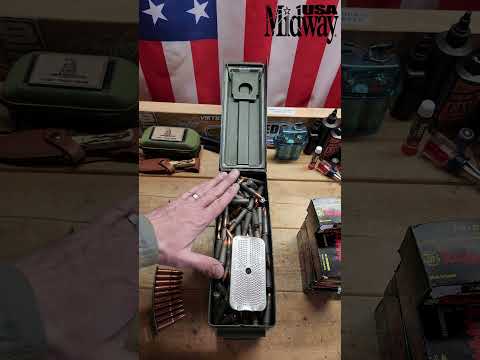
The smartest way to store a large bulk ammo stockpile at home is to prioritize environmental stability over convenience, using sealed, moisture-proof containers like military-style .50-caliber cans or heavy-duty plastic ammo boxes with gasketed lids. Bulk ammo must be kept in a cool, dry, low-humidity environment—ideally below 70°F with under 50% relative humidity—because temperature swings and moisture are the primary enemies of primers and propellant. Before sealing, add desiccant packs and consider oxygen absorbers to prevent corrosion, then label every container with caliber, lot number, and purchase date. Stack cans off the concrete floor on wooden pallets or shelves to avoid wicking moisture, and rotate your stock using a first-in, first-out system so older rounds get used first. Avoid storing loose rounds; keep them in original factory boxes or reloading trays inside the cans.
For long-term bulk storage, never open the cans in humid conditions—wait for a dry day to prevent trapping airborne moisture inside.
Check seals yearly and replace desiccants as needed to maintain ignition reliability.
Controlling Humidity and Temperature to Prevent Corrosion and Misfires
Keeping your bulk ammo happy is all about a stable, dry environment. Aim for a consistent temperature between 60–70°F, and crucially, keep relative humidity below 50%. A simple digital hygrometer inside your ammo can gives you a real-time readout, so you’re not guessing. Silica gel desiccant packs are your best friend here—recharge them in the oven when they get saturated. Avoid attics or garages where temps swing wildly; that cycling creates condensation inside the can, which is the real enemy. Controlling humidity and temperature to prevent corrosion and misfires means your primers stay crisp and your brass won’t pit.
Stable temps and low humidity are the entire game—keep it dry, keep it cool, and your bulk 7mm WSM Ammo for Sale ammo will perform flawlessly for years.

Rotating Your Inventory So the Oldest Rounds Are Used First
Rotating your inventory so the oldest rounds are used first prevents age-related degradation—powder breakdown, primer instability, and case corrosion—from ever affecting your shooting. Adopt a clear first-in, first-out (FIFO) system by physically adding new bulk ammo behind existing stock on the shelf, never in front. When you pull ammunition for range trips, always take from the front of the row, which holds the earliest purchases. To simplify tracking, mark each shipping case with the purchase month and year using a permanent marker; this makes oldest-rounds-first inventory rotation a visual habit. Perform the rotation check every six months:
- Slide all older boxes forward
- Place newer bulk ammo at the rear
- Re-verify date labels before resealing the storage container
This small routine ensures your reserve never silently exceeds a few years of age.
Why Does Ammunition in Bulk Feel Different at the Range?
Bulk ammunition feels different at the range primarily because of lot-to-lot consistency—or the lack of it. When you buy a massive case, you’re often pulling from multiple production runs, each with subtle variations in powder charge, primer seating, or brass thickness. That translates to a live-fire experience where your first mag might punch slightly flatter, while the next string feels snappier or softer in recoil. Your point of impact may drift a half-inch at 25 yards, not because you flinched, but because the round’s internal pressure changed. Bulk ammo also tends to be packed tight, so the first few mags are often colder or more oiled, altering bolt speed and ejection patterns until the gun warms up.
The real shift isn’t your shooting—it’s the invisible variability in every hundred-round brick you burn through.
Once you tune your zero to one specific box, the next batch under the same label can feel like a whole new load, demanding a fresh sight picture.
Consistent Lot Numbers for Uniform Accuracy and Recoil
When you buy bulk ammo, mixed lot numbers are the hidden culprit behind inconsistent feel at the range. Each lot is manufactured with tightly controlled powder charges and bullet seating, meaning a single lot delivers **uniform accuracy and recoil** with every round. Pulling from multiple lots introduces subtle specialty sports variations in velocity, so your point of impact shifts and perceived recoil spikes unpredictably. For consistent training or competition, always check that your bulk case shares one lot number; this ensures identical pressure curves and barrel harmonics. You’ll notice tighter groups and a steadier cadence, because each shot replicates the previous one exactly. Trust the lot stamp—it’s your guarantee of shot-to-shot uniformity.

Getting Past the Break-In Period With Enough Rounds for Reliable Testing
Fresh barrels, springs, and slides exhibit stacking tolerances that skew accuracy and velocity until they seat. A mere box of fifty only reveals break-in noise, not true performance. With bulk ammo for reliable testing, you push 200–300 rounds through, allowing carbon to seal chambers Shotgun Ammo for Sale and friction points to polish. Only after this threshold do group sizes tighten and malfunctions fade, exposing the round’s actual ballistic signature. Buying by the case ensures you do not waste premium loads on a gun not yet settled. Shoot past the rough phase, then evaluate. Otherwise, you risk zeroing a rifle or trusting a defensive load that simply has not broken in yet.
What Are the Hidden Perks of Buying in High Volume Beyond Price?
Beyond the obvious per-case savings, buying bulk ammo delivers logistical advantages that transform your range routine. Lot consistency is the hidden gem—a single production batch means identical velocity and point of impact, so your zero holds true across thousands of rounds without re-tuning for varying powder charges or bullet weights. This fuels efficient training; you can burn through magazines for muscle-memory drills without rationing. It also guarantees supply resilience—no last-minute scrambles before a match or hunt. Plus, fewer purchasing trips mean less shipping waste and fewer handling errors at your door. The psychological perk? Inventory confidence—know you have ample rounds for extended sessions, giving you the freedom to shoot spontaneously, test loads, or simply enjoy plinking without counting cartridges.
Never Cutting a Training Session Short Due to a Low Supply

When you buy bulk ammo, never cutting a training session short due to a low supply becomes a structural advantage rather than a discipline issue. A deep inventory lets you preserve the neurological repetition required for muscle memory, because each trip to the range can proceed through its full planned drill sequence without rationing. This prevents the common failure mode where shooters stop at the 50-round mark to save the last box for “later,” thereby truncating the highest-value pressure drills at the end of a session. With volume on hand, you can also schedule follow-up sessions immediately after identifying a trigger-control flaw, without waiting for a resupply shipment.
- Estimate a baseline: count how many rounds you burn in a complete, unconstrained practice session.
- Multiply by the number of sessions you can attend before your next restock—this is your minimum bulk purchase target.
- Then add 20% over that figure, so equipment malfunctions or double-feeds 6.5 Creedmoor Ammo for Sale never force an early stop.
Keeping a Dedicated Reserve for Your Preferred Self-Defense Loads
Buying bulk ammo lets you set aside a dedicated self-defense reserve without touching your practice stash. This reserve ensures your preferred hollow points or bonded loads stay untouched for actual threats, while you burn cheaper ball ammo at the range. Because defensive ammunition gets discontinued or reformulated, a high-volume purchase locks 7mm-08 Ammo for Sale in the exact lot number—so your carry ammo performs identically every time you need it. You also avoid the panic-buying trap where defensive boxes vanish; your reserve is already filled. Rotate this stash annually by shooting old stock and replenishing, keeping your defensive loads fresh and reliable without ever dipping into your training supply.
How Do You Quickly Assess Whether a Wholesale Deal Is Actually Worth It?
You’re staring at a pallet of 5.56, the per-round price looking razor-thin, but the real test isn’t the sticker—it’s the arithmetic hidden in the crate. First, divide the total cost by the *actual* round count, not the box’s claim, because loose-packed or repacked ammo often bleeds five to ten percent to damaged casings or missing rounds. Then, compare that true per-round figure against your last three purchases from a trusted local dealer, not the internet’s fantasy lows, and ask yourself if the savings survive a 200-mile round-trip fuel burn. Check headstamp uniformity—mixed headstamps Ammunition for Sale mean mixed pressure and zero resale value. If the primer sealant is cracked or the cartridges rattle loosely in their trays, you’ve just bought a headache, not a deal. Your time is the hidden cost—sorting through bent tips and corrosion eats every dollar you saved. A true wholesale score should feel like a no-brainer within sixty seconds: one clean batch, one consistent lot, and a price that beats your supplier by at least fifteen percent, *but only if you can move it before the next shipment hits your cash flow*. Otherwise, you’re not buying ammo—you’re renting a storage unit.
Recognizing Fair Pricing Per Round Without Doing Complex Math
To recognize fair pricing per round without complex math, anchor on a reference price for a common caliber, like 9mm, and compare against it. Divide the total case cost by a round number, such as 500 or 1,000, to get a rough per-round figure in your head. Fair pricing per round depends on caliber, brand, and quantity tiers, so a 1,000-round case should always cost less per round than a 50-round box of the same load. If the per-round number is within 10–15% of your usual retail price, it’s a reasonable deal. For bulk orders, watch for free shipping or rebates that effectively lower the cost per round. *A quick sanity check is comparing price-per-round against the last three purchases you made, not against advertised “sale” prices.* Use a simple table for quick mental reference: 500 rounds at $250 equals $0.50/round; 1,000 rounds at $450 equals $0.45/round—the larger quantity should always show a lower per-round figure if priced fairly.

Checking the Lot Date and Packaging Integrity Before Committing to a Case
Before committing to a case, verify the ammo lot date and packaging integrity to avoid degraded performance. First, locate the lot code on the case flap or carton; a fresh date indicates propellant stability, while older stock risks inconsistent velocity and misfires. Next, inspect the outer box for crushing, moisture stains, or torn seals—these expose rounds to humidity and temperature swings. Finally, open the case and check the inner cartons for bulging, loose primers, or corroded casings. If any box shows evidence of re-sealing or tampering, reject the lot entirely, as compromised packaging undermines reliability and safety.
- Check the lot code for a recent manufacture date.
- Examine the case’s outer seams and corners for damage.
- Sample one inner box to confirm primers are seated and brass is unblemished.